The app remembers who you keep playing
A personal head-to-head record for the opponent you keep coming back to.
Last updated April 17, 2026 · By Kurt Bijl
Play WordSalvo against real players
What a rivalry actually is
A rivalry is a lifetime record between you and one specific opponent — tied to their account, not to a session. The moment the second game against the same person ends, a `Rival` entry exists for both of you and starts accumulating. Win–loss–draw, total games, total points, the streak you are currently riding or suffering, the biggest win margin, the biggest loss margin, the closest game ever played, and the highest-scoring word each side has landed in your shared history.
The record is persistent and bidirectional. If you have beaten your brother 17 times and he has beaten you 14, both of you see the same 17–14 written in the right direction. Nothing resets just because the app updates. The only thing that ends a rivalry is one of you deleting the account.
It is not a leaderboard. It is not a ranking. It is one pair of numbers that means something because the two humans behind them recognise each other's play.
The rivalry card, shown after every rematch
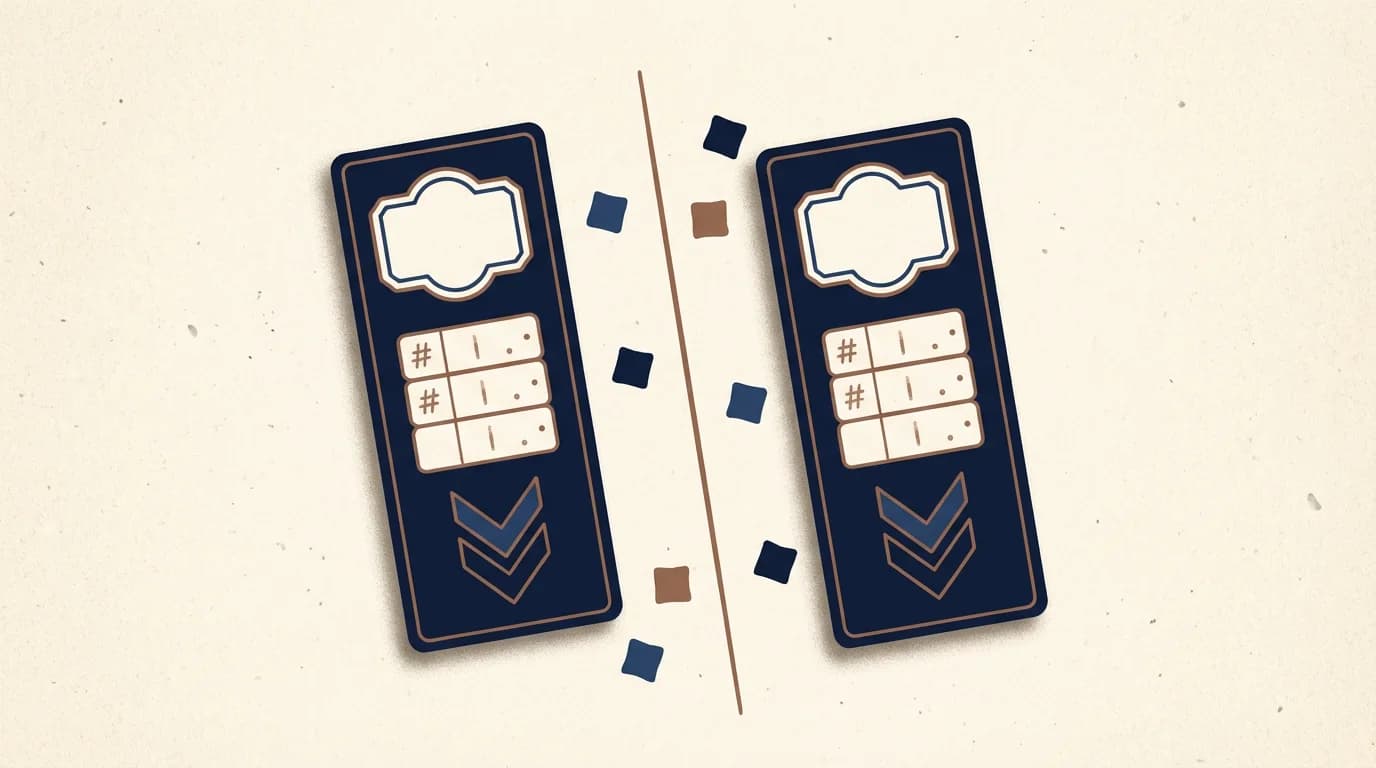
The game-over screen has a stack of post-game cards — decisive moment, rack penalty, personal records, the brilliancy ring. When the opponent is someone you have played before, a rivalry card joins the stack. The layout is built for the one second you glance at it: the updated head-to-head in big numerals, the current streak as a chevron next to the winner's name, and the closest-game line underneath as a reminder of how tight things have been.
If you have both played enough analyzed online games, the card also shows average brilliancy side by side — your accuracy number against theirs, computed from the same engine replay that powers post-game analysis. Over time, that line does something the win count cannot: it tells you whether your gap is closing.
You can tap the card to open the full rivalry view: a list of your most recent ten games with score lines, your signature word (and theirs), the date you first played, and the tier you have earned.

Eight tiers, from Acquaintance to Mythic Rival
Total games played against the same opponent earns a tier. The tiers are labelled, in order: Acquaintance (1 game), Rival (5), Nemesis (10), Archrival (20), Sworn Enemy (50), Blood Rival (100), Eternal Nemesis (150), Mythic Rival (250). These are cumulative — the counter never resets — and they apply per pairing, so you can be someone's Nemesis while barely being another friend's Acquaintance.
The names are affectionate, not moderation-adjacent. Nothing about the tier changes matchmaking, rating, or what either player can do inside the game. It is a record of how many times two humans have sat across a board from each other, nothing more.
For scale: 250 games at roughly one game a week is close to five years. Mythic Rival is rare on purpose.
| Tier | Games |
|---|---|
| Acquaintance | 1 |
| Rival | 5 |
| Nemesis | 10 |
| Archrival | 20 |
| Sworn Enemy | 50 |
| Blood Rival | 100 |
| Eternal Nemesis | 150 |
| Mythic Rival | 250 |
How to start one
There is no "Start rivalry" button. You start a rivalry by playing the same person twice. The two fastest ways to line up a repeatable opponent:
Friend codes. Every WordSalvo account has a 6-character friend code you can share over any channel — WhatsApp, Messenger, SMS, or a QR code. Both sides accept, and the Friends tab keeps a rematch button next to their name. See the how-it-works walkthrough for the full flow.
Matchmaking + rematch. The queue pairs you within a ±200 rating-point window, so the opponent you just played is usually within striking distance when you queue again. The game-over screen has a direct rematch button; take it twice and the rivalry is live.
In-game chat sits alongside the rivalry — text messages, quick replies, and a toxicity filter on messages before they send. Trash talk is a feature, not a loophole.
What is recorded, and what is not
Finished games update the record: scores, who won, streak direction, margin, and any word that beats your previous personal best against that opponent. The rivalry keeps the ten most recent game summaries for the scrollable strip on the card, alongside the full aggregate counters. Draws count as draws, not half-wins.
The record ignores local pass-and-play games. Those do not persist to the server, so there is no opponent account to tie them to. Online matches (human or AI opponents with accounts) feed the rivalry; one-device couch games do not. It also ignores unfinished games — a resignation counts, a stalled game that times out does not update the streak.
It is language-agnostic. You and your sister can play English on Monday, Dutch on Wednesday, and Spanish on Sunday — all three games land in the same rivalry counter. The relationship just accumulates.
Frequently asked questions
- do rivalries work across languages?
- Yes. A rivalry is keyed to the other player's account, not to a dictionary. You can play an English game today, a Dutch game next week, and a Spanish game after that — all three count toward the same head-to-head record, the same streak, and the same tier progression.
- can I see a rivalry's full history?
- You can see the ten most recent games on the rivalry card, with scores and dates. Aggregate totals (wins, losses, draws, biggest margins, average brilliancy, closest game ever) cover the entire shared history. A full per-game log beyond the last ten is on the roadmap; the summary already carries the facts most players ask for.
- what happens if I unfriend someone?
- The rivalry record stays. It is stored against the opponent's account ID, not inside your friend list, so removing them from Friends only hides the rematch shortcut — it does not erase your shared history. If you want the data actually deleted, the account-deletion flow on the profile screen is the route; that clears your side of every rivalry.
- does the rivalry ever reset?
- No app-update reset. The count is lifetime between the two accounts. The only way to end it is for one of the two accounts to be deleted.
- do AI opponents count?
- AI games feed the rivalry record the same way human online games do — they play through the online game service and update the post-game stats pipeline. Each AI difficulty is a separate account, so your record against Easy is tracked separately from your record against Hard.
- is any of this Word Master?
- The record itself — head-to-head, streak, closest game, signature word, tier — is free on tracked PvP games. The average-brilliancy comparison on the rivalry card depends on post-game engine analysis, which is included with Word Master for the games it covers. The numeric record shows up either way.